Resilience in Galveston, TX.
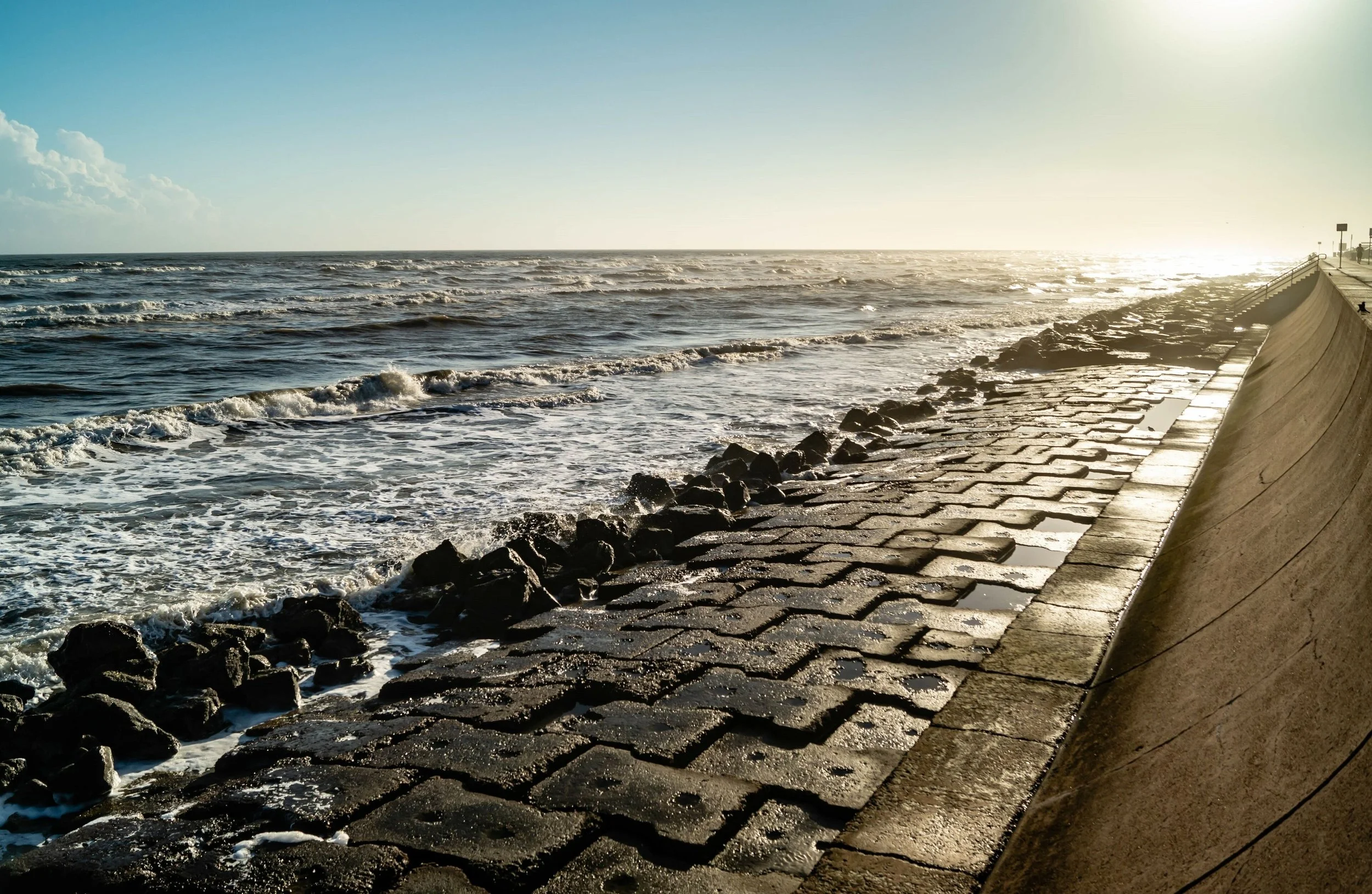
As the definition simply states, the term can be applied to any person, community, population, environment that has the ability to withstand stressful situations or pressure and recover from or successfully adapt to those situations. The last part of the statement is what makes the person, place, or population resilient. The Galveston Seawall, located on the Gulf side of the barrier island, would be an example of a resilient feature implemented after the 1900 storm.
“Resilience is the ability to prepare and plan for, absorb, recover from, and more successfully adapt to adverse events.”
- National Academies of Science, Engineering, and Medicine (2012)
What is resilience?
What does this look like in local communities?
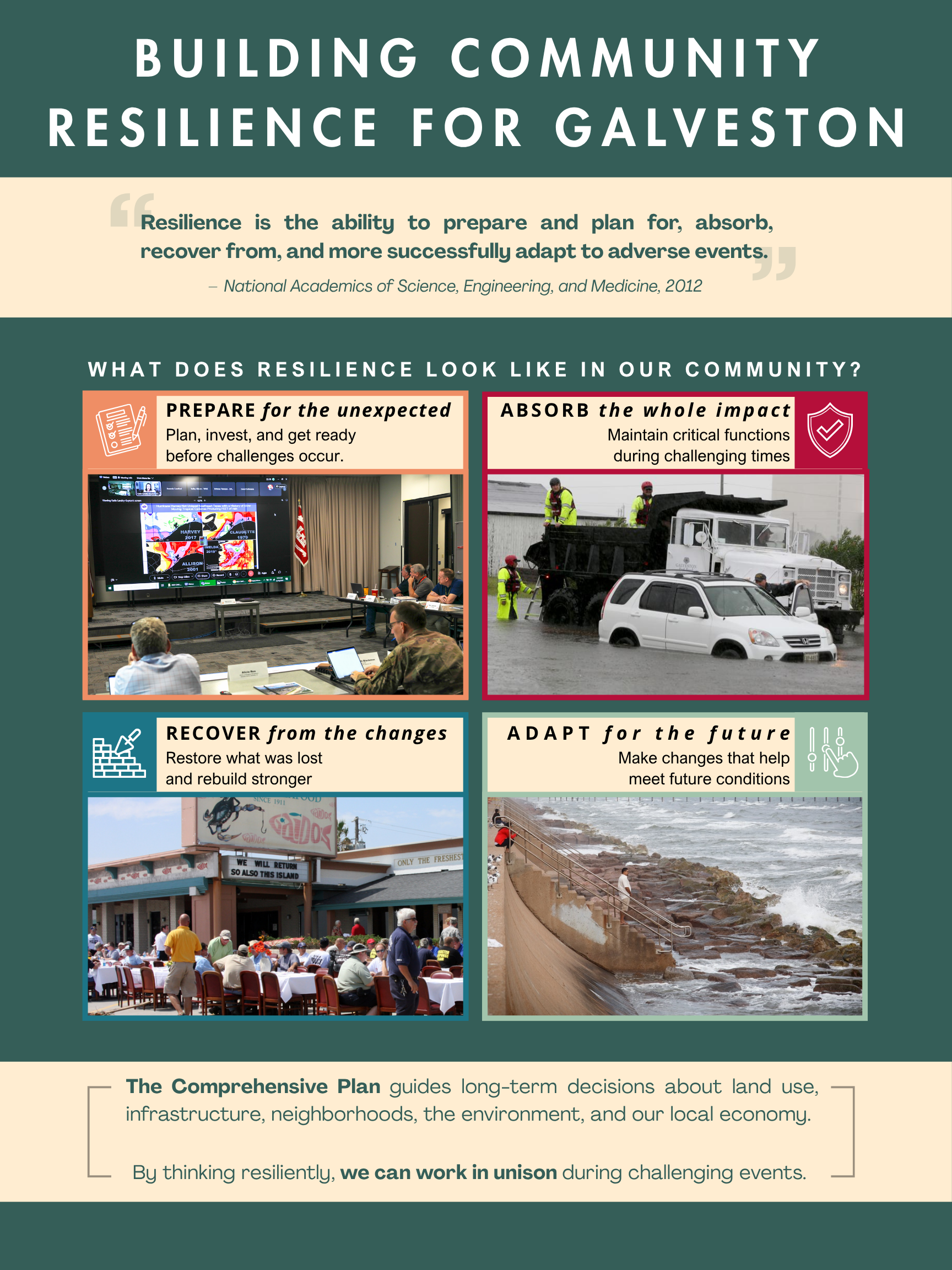
PREPARE for the unexpected
Communities should invest their time and energy into planning for both the expected and unexpected challenges they will and might face in the future based on the information they have currently.
ABSORB the impacts
Resilient communities should be able to continue critical functioning during challenging times and events.
RECOVER from the changes
This involves short and long term restoration activities based on the disturbance experienced; the community should be able to restore what was lost and build back stronger for future events.
ADAPT for the future
A critical part of being resilient is to learn from those passing events about what can be done better and what it is needed to change so that the community is better prepared for that event or something similar the next time it is being experienced.
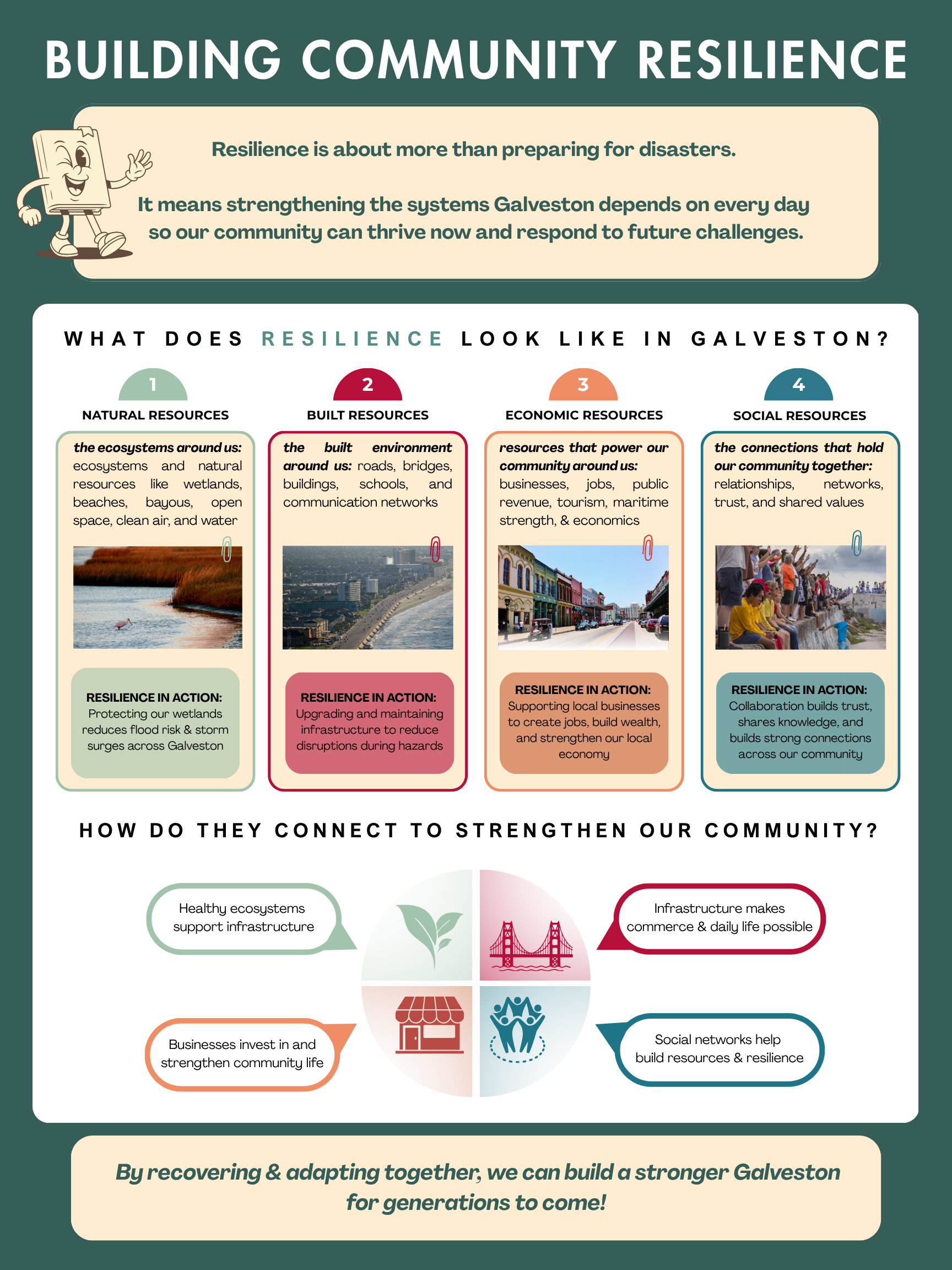
Resilience is about being adaptable and flexible in the face of uncertainty. Different ways in which local communities like Galveston can build their resilience are:
Links
National Academies of Science, Engineering, and Medicine (2012): https://www.nationalacademies.org/read/13457/chapter/2
US Department of State: https://2009-2017.state.gov/m/med/dsmp/c44950.htm